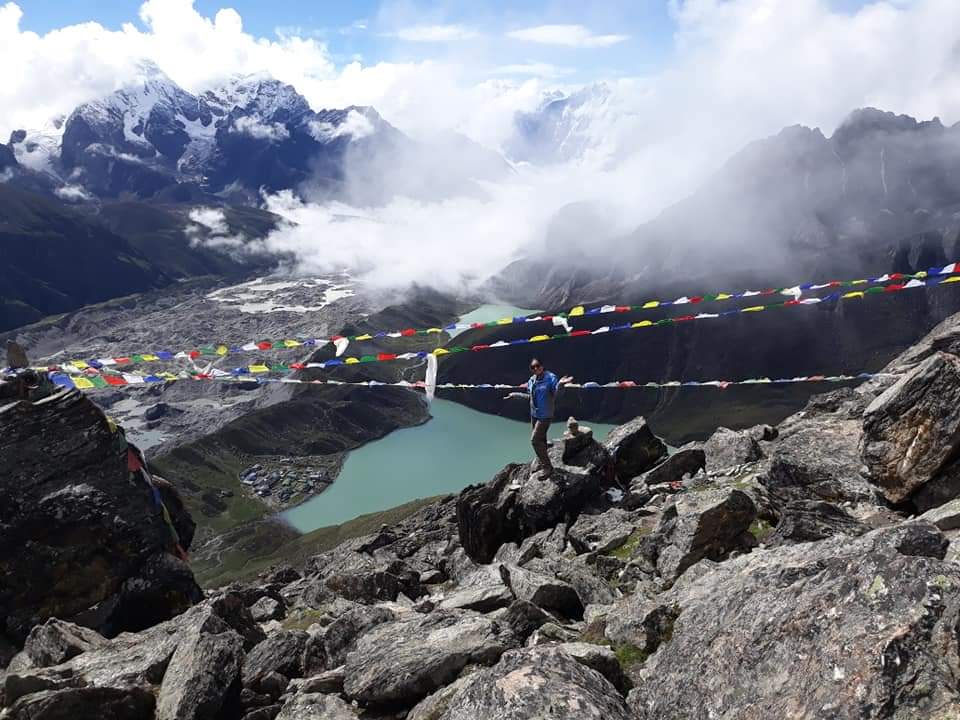
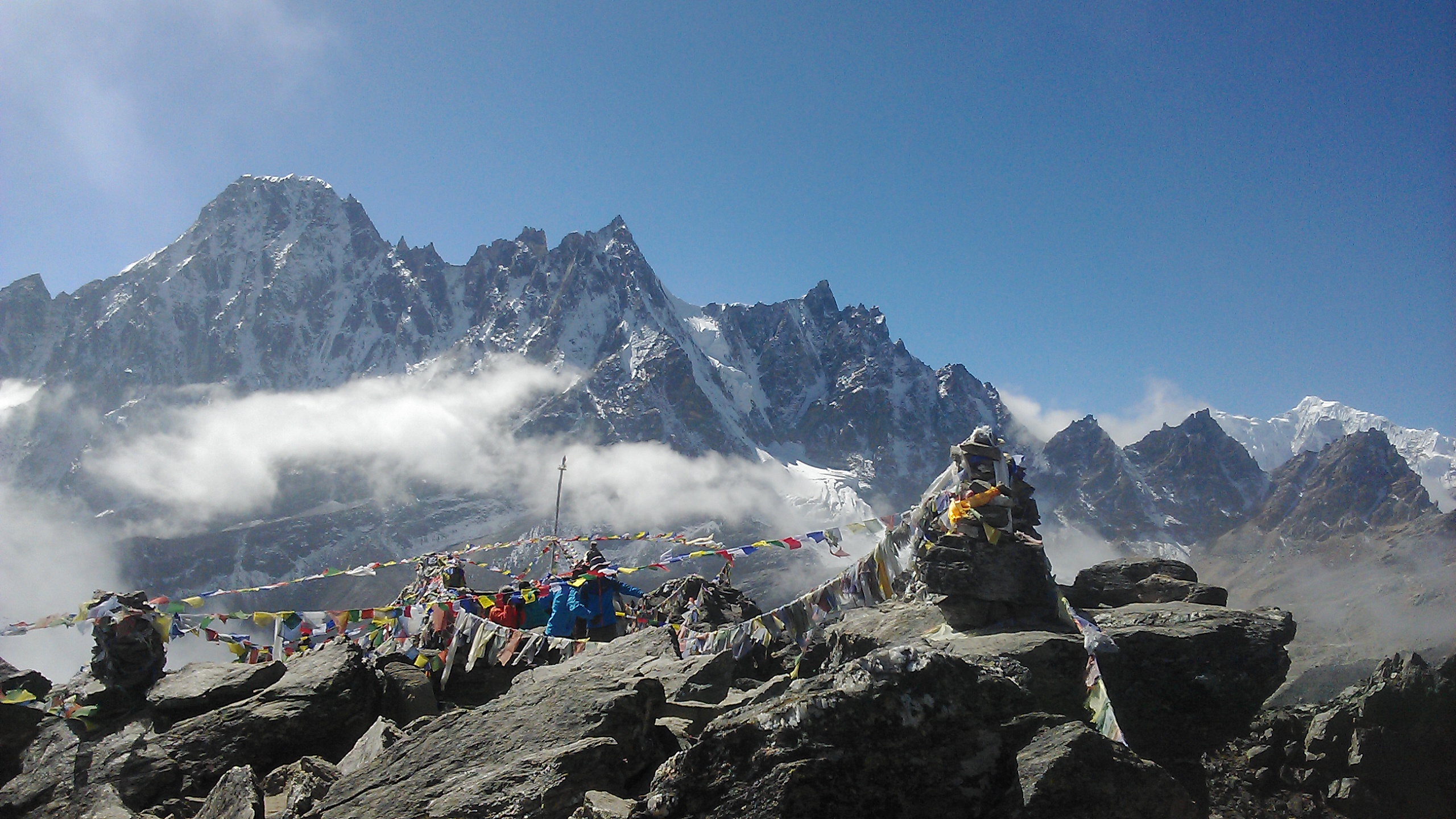
Gokyo Lake, located in the Khumbu region of Nepal, is part of the Sagarmatha National Park and is known for its stunning beauty and vibrant blue lakes. Here’s a deeper look into the area:
Geography and Lakes
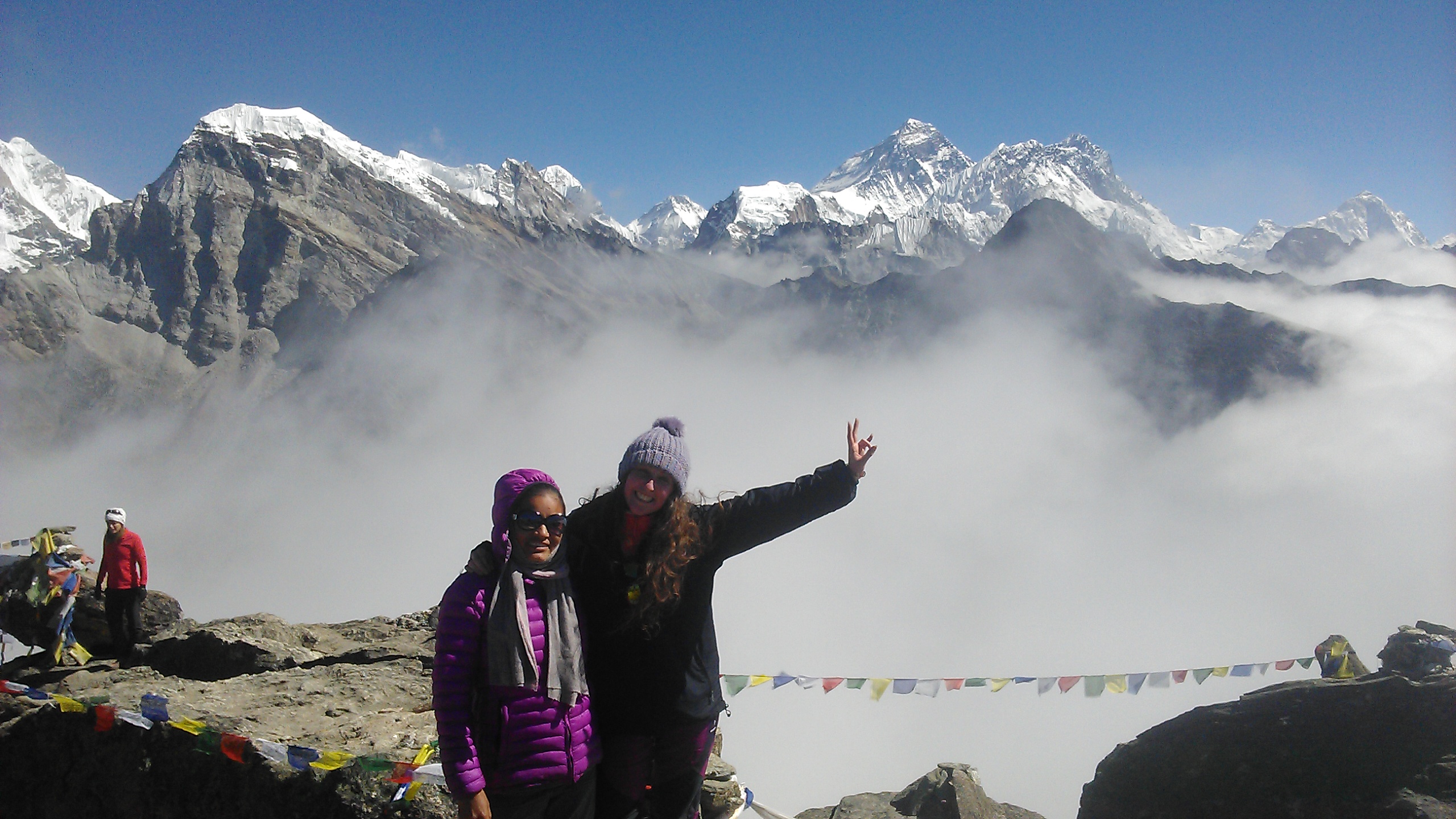
Gokyo is a collection of six main glacial lakes, with Gokyo Lake being the largest. The lakes are fed by the Ngozumpa Glacier, the longest glacier in Nepal. The area is characterized by rugged mountains, high-altitude terrains, and striking views of peaks like Mount Everest, Lhotse, and Cho Oyu.
Cultural Significance
Gokyo is a sacred area for the local Sherpa community, with a rich cultural heritage. The village of Gokyo serves as a base for trekkers and climbers and features traditional Sherpa architecture. The region is home to the Gokyo Ri, a popular viewpoint offering breathtaking panoramic views.
Trekking and Access
The Gokyo Lakes trek is a popular route among trekkers, often considered less crowded than the Everest Base Camp trek. The trek typically starts from Lukla and includes stops at Phakding, Namche Bazaar, and Dole before reaching Gokyo. It offers a mix of challenging terrain and stunning scenery.
Flora and Fauna
The region supports a diverse range of flora and fauna, including rhododendron forests, alpine meadows, and rare wildlife like the Himalayan tahr, snow leopards, and various bird species.
Climate and Best Time to Visit
Gokyo has a high-altitude climate with cold temperatures, particularly in winter. The best time to visit is during the pre-monsoon (March to May) and post-monsoon (September to November) seasons when the weather is relatively stable, and views are clear.
Adventure Opportunities
In addition to trekking, Gokyo is popular for activities such as climbing, fishing, and exploring glacial landscapes. The area also serves as a starting point for those attempting to climb the nearby peaks.
Environmental Concerns
Like many trekking areas, Gokyo faces challenges related to tourism, such as waste management and environmental degradation. Efforts are being made to promote sustainable tourism practices.
This overview should give you a good understanding of the Gokyo Lake area. If you need more specific information, feel free to ask!